
What Is a Vacuum Breaker?
A Vacuum Breaker is a backflow prevention device that admits air into a water line when pressure drops. The air breaks the suction that could pull contaminated water into the clean supply. Vacuum breakers commonly protect hose connections, irrigation systems, and other outlets where water may flow through an attached hose or device.
Quick Facts About Vacuum Breaker
Category
Backflow prevention device
Used for
Stopping back-siphonage
Common confusion
Often confused with a check valve
Also called
Vacuum Relief Valve
Often discussed with
Backflow Testing
Key Takeaways About Vacuum Breaker
- It protects against back-siphonage caused by negative pressure.
- The device opens an air passage when supply pressure falls.
- A vacuum breaker is not the same as a check valve.
How Vacuum Breaker Works
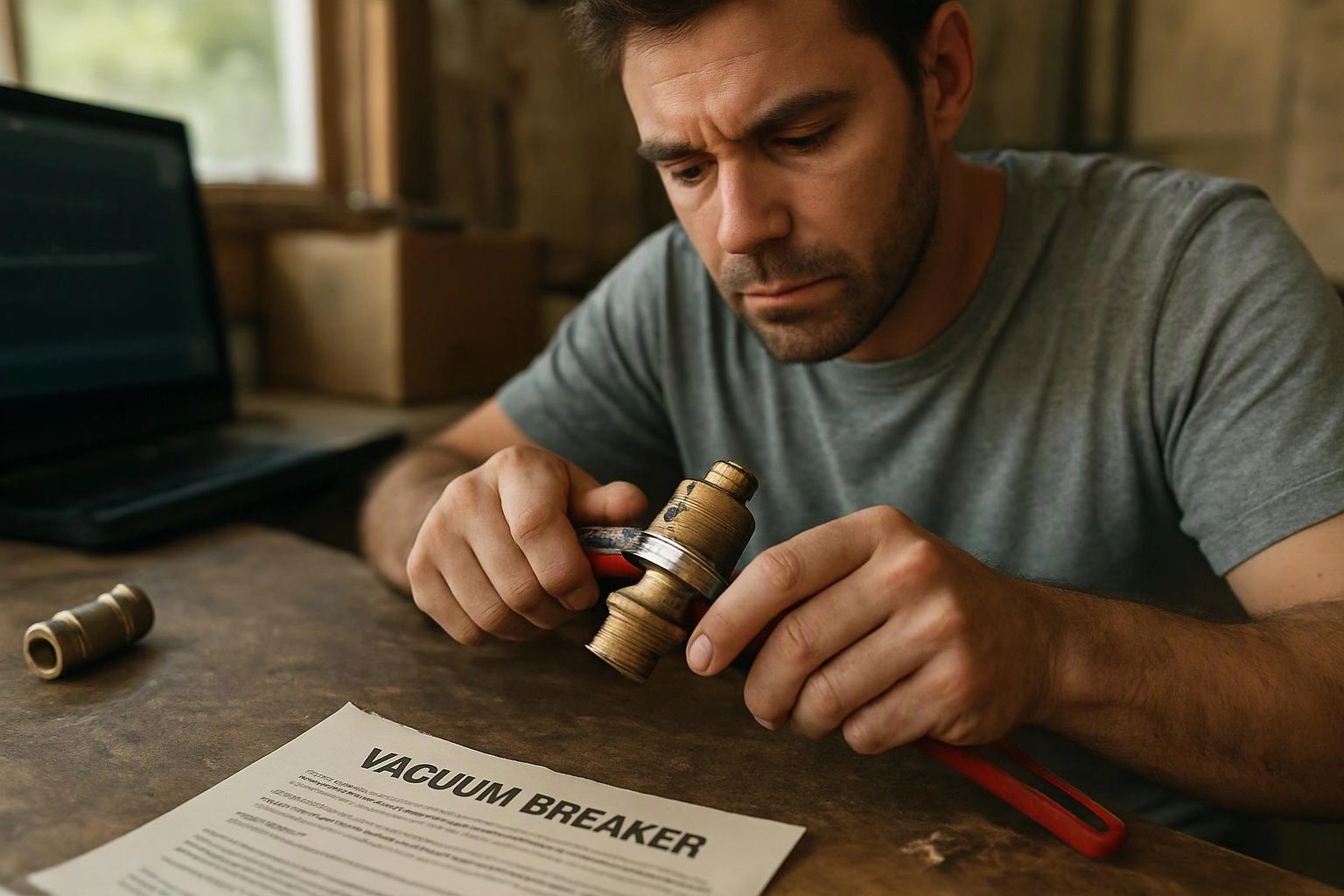
A Vacuum Breaker monitors pressure inside a water line. Under normal pressure, the device keeps the air inlet closed while water moves toward the outlet. If supply pressure drops, the inlet opens and lets air enter the line.
Related glossary terms: Backflow Preventer, Check Valve, Air Gap.
That air interrupts the suction that could draw water backward. The device protects the clean supply from water connected to a hose, tank, or irrigation outlet. A backflow preventer describes the broader group of devices that control reverse flow. A check valve uses a closing disc or flap to block flow in the wrong direction, but it does not work in the same way as a vacuum breaker.
Expert Note
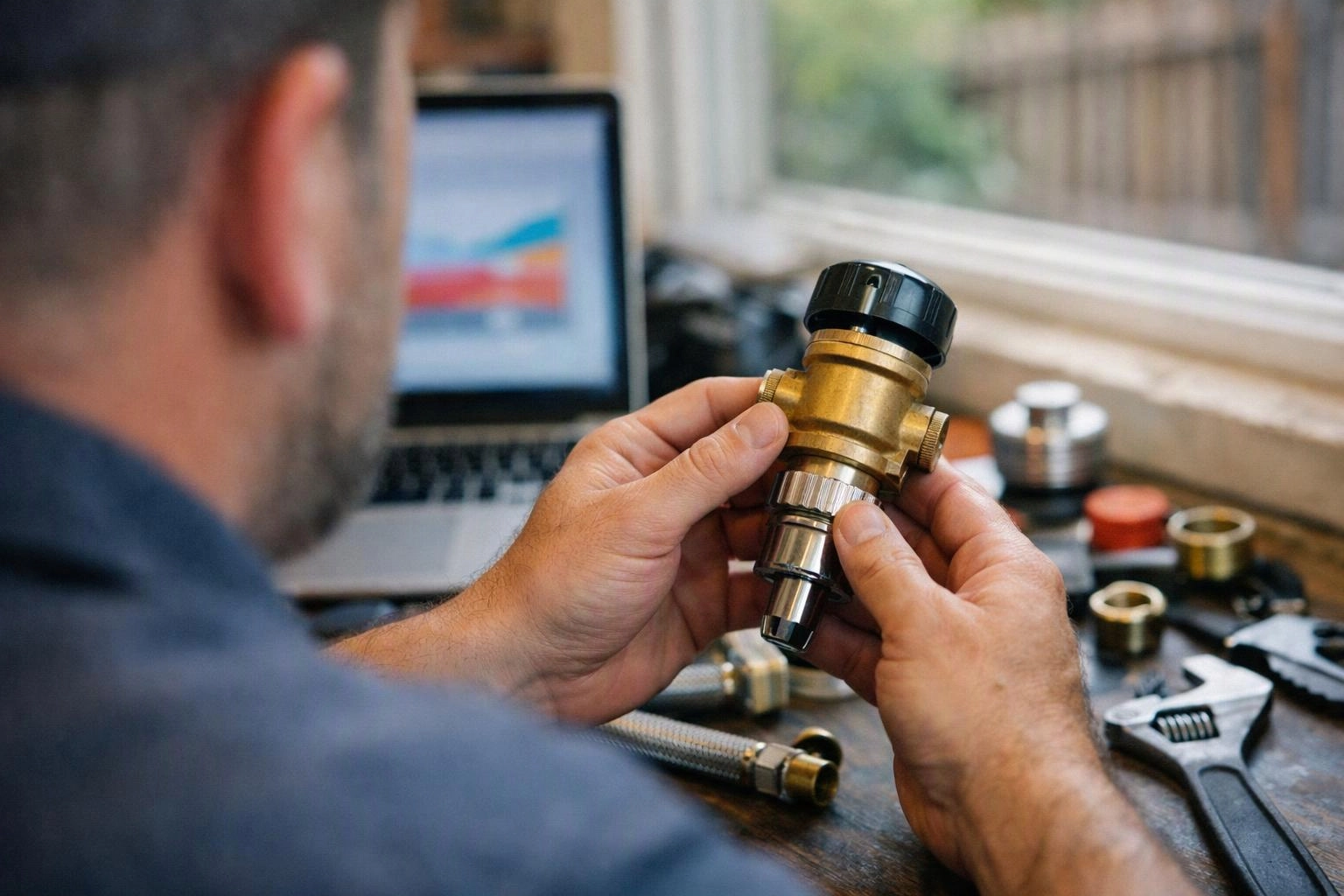
When we handle Backflow Testing, we inspect the vacuum breaker for correct installation, visible damage, and signs of restricted movement. We also check whether the device opens and closes as pressure changes. A worn seal or blocked air inlet can affect its protective function.
Vacuum Breaker in Practice: A Real-World Example
A hose connection near a utility sink can create a back-siphonage risk if the hose sits in a bucket. A vacuum breaker at the connection admits air when supply pressure falls and interrupts that suction.
Related Services
Related Terms
Backflow Preventer
A Backflow Preventer is a plumbing device that keeps contaminated water from flowing backward into a…
Check Valve
A check valve is a one-way plumbing device that lets water flow forward and blocks reverse…
Air Gap
An air gap is an open space that separates a water supply from a drain or…
Water Pressure
Water pressure is the force that moves water through supply pipes and plumbing fixtures. Pressure helps…
PlumbingAuburnwa.com
Have Questions About Vacuum Breaker?
Contact PlumbingAuburnwa.com for practical guidance on Vacuum Breaker and related plumber work in Auburn.