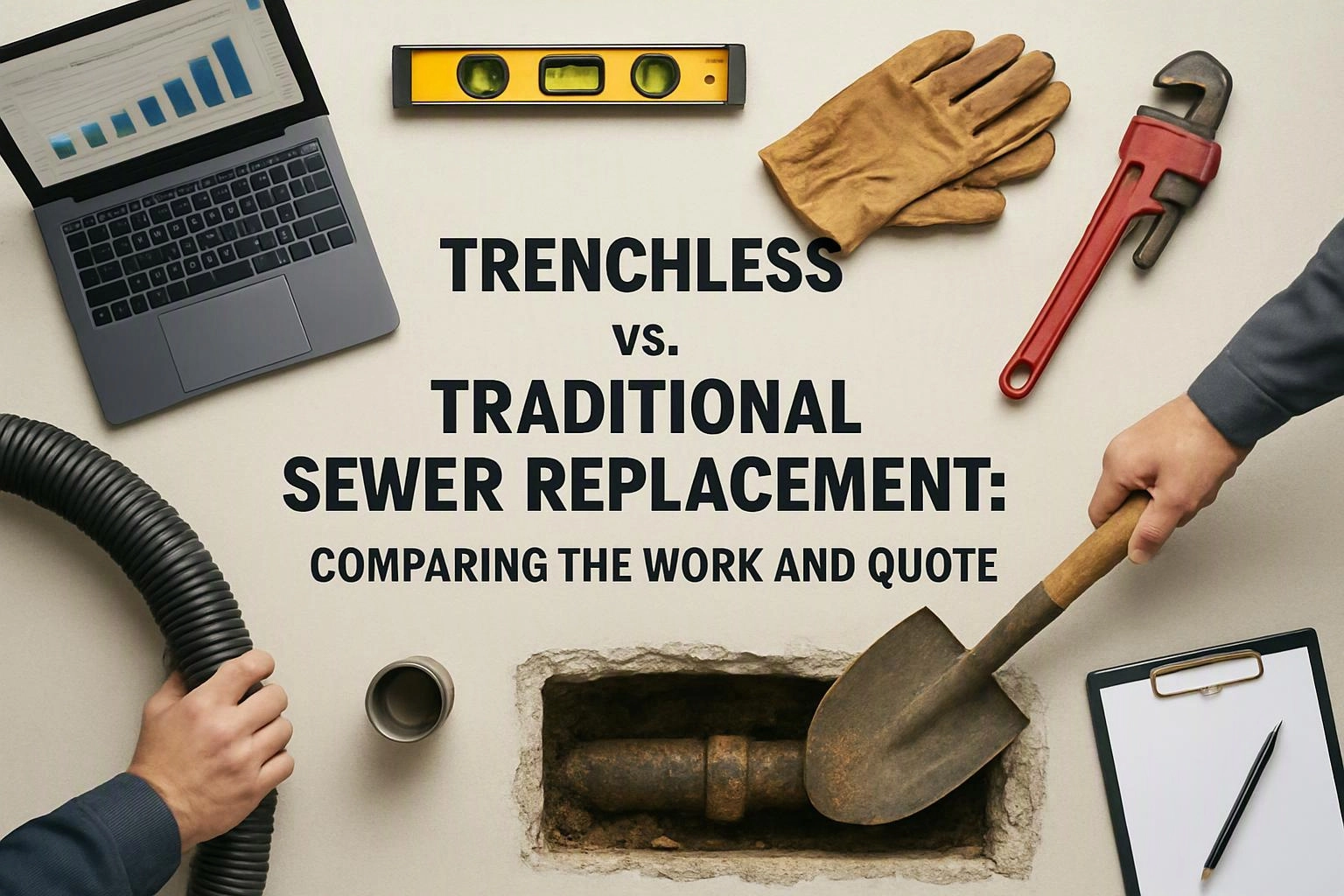
Trenchless vs. Traditional Sewer Replacement: Comparing the Work and Quote in Auburn, Washington
Trenchless replacement limits surface disruption through pipe lining or pipe bursting, while traditional replacement exposes the sewer through excavation. PlumbingAuburnwa.com checks the pipe condition, access, layout, and restoration needs before explaining which method fits and preparing a quote.
Request an EstimateHow Trenchless and Traditional Sewer Replacement Differ
Trenchless sewer replacement repairs or replaces a sewer through limited access points, while traditional sewer replacement exposes the pipe through an open trench.
Trenchless work follows the existing sewer pipe path when the pipe condition and access allow it. Traditional excavation opens the ground above the line, which gives our crew direct access to the pipe and surrounding soil.
The main difference is surface disruption. Trenchless work can protect more landscaping, paving, and walkways, while open excavation may make surface restoration part of the project.
We explain both options after reviewing the pipe, route, and property layout. Our guide to Trenchless Sewer Repair covers the no-dig method in more detail.
Trenchless vs. Traditional Sewer Replacement at a Glance
Trenchless work usually reduces surface disruption, while traditional excavation provides direct access to the pipe and surrounding soil. The quote depends on the property and pipe condition.
These options fit different project conditions. We use the inspection findings to explain the likely work, restoration needs, and quote scope.
- Trenchless replacement: best when the existing route, access points, and pipe condition support lining or bursting.
- Traditional replacement: best when the pipe needs direct access or the route cannot support trenchless work.
| Factor | Trenchless replacement | Traditional replacement |
|---|---|---|
| Project cost drivers | Access points, pipe condition, lining or bursting method, and limited restoration. | Excavation, pipe depth, soil conditions, replacement materials, and surface restoration. |
| Project timeline drivers | Inspection results, access, preparation, and the selected trenchless method. | Digging conditions, pipe depth, utility conflicts, backfill, and restoration. |
| Maintenance | The new lining or pipe still needs proper drainage care and inspection when problems return. | The new pipe needs proper use, drainage care, and attention to recurring sewer symptoms. |
| Property disruption | Usually lower surface disruption when access and pipe condition support the method. | Greater excavation and restoration needs because the sewer is exposed. |
| Best-fit conditions | A usable pipe route with suitable shape, access, and structural support. | Severe damage, poor alignment, difficult access, or conditions needing direct soil access. |
What Work Does Trenchless Sewer Replacement Involve?
Trenchless sewer replacement uses pipe lining or pipe bursting when the existing route and pipe condition support that method.
We begin with a sewer camera inspection to view cracks, root intrusion, breaks, and changes in the existing pipe. We also review the access points and confirm whether the new work can follow the existing pipe path.
Pipe lining places a resin-based liner inside the existing sewer. Pipe bursting uses access points to break the old pipe and pull a new pipe through its path.
Pipe Lining Compared With Pipe Bursting
Pipe lining creates a new pipe inside the existing line, while pipe bursting breaks the old line and pulls a new pipe through its path.
Cured-in-place pipe lining can address some cracks and root intrusion when the existing pipe still has a suitable shape. It does not restore a line that has lost the route or space needed for a liner.
Pipe bursting can replace a more damaged line when the route and access support the equipment. A collapsed sewer pipe may still require excavation if the pipe shape, access, or alignment prevents trenchless work.
What Work Does Traditional Sewer Replacement Involve?
Traditional sewer replacement opens the ground above the line so we can remove the damaged pipe, install the replacement, and restore the excavation.
Our crew plans the open trench around the pipe route, depth, nearby utilities, and soil conditions. We remove the broken pipe, prepare the bedding, install the new sewer pipe, and check the connection points.
Backfill follows the installation and inspection work. Landscape restoration, driveway restoration, or walkway repairs may also belong in the quote scope.
Advantages of Trenchless Sewer Replacement
Trenchless replacement can reduce surface work when the pipe route and access support the method. We still confirm the repair limits through inspection before recommending it.
Best for: properties where limited excavation matters and the existing sewer can support trenchless work.
Advantages of Traditional Sewer Replacement
Traditional replacement gives our crew direct access to the sewer pipe, bedding, and surrounding soil. That access can matter when the line has severe damage or difficult site conditions.
Best for: properties where direct access, route correction, or severe damage controls the project choice.
Which Sewer Replacement Method Fits the Property?
The better method depends on whether the pipe can support trenchless work and how access, alignment, utilities, and surface restoration affect the project.
We review the pipe condition first. A cracked pipe may support lining, while a broken pipe or pipe collapse may require bursting or open excavation.
Property layout also matters. Tight access, utility conflicts, deep pipe placement, and valuable surfaces can change the practical choice.
In Auburn, Washington, generally wet conditions in King County can increase the importance of reliable drainage maintenance around below-grade plumbing. That regional condition does not replace an inspection of the property's sewer line.
What Changes the Quote for This Sewer Replacement?
The quote changes with the pipe's condition, route, depth, access, chosen method, and restoration work; we inspect these factors before preparing the quote.
A sewer camera inspection helps us review the pipe material, pipe length, joints, cracks, root intrusion, and possible collapse. We also check whether access points support lining, bursting, or open excavation.
Soil conditions and nearby utilities can affect excavation planning. Landscape restoration, driveway restoration, and other surface work can also change the quote scope.
Our quote explains the recommended method, planned work area, repair limits, and restoration needs. We give the property-specific quote after reviewing the inspection findings.
How We Check the Sewer Before Recommending a Method
Our sewer review connects the reported symptoms to the pipe condition, route, and repair options.
Our team can also explain whether cleaning should come before inspection. The guide “Sewer Camera Inspection vs. Sewer Cleaning: What to Book First” can help you understand that choice.
Can a Collapsed Sewer Pipe Be Repaired Without Digging?
Yes, a collapsed sewer pipe may be replaced without broad digging when the remaining route and access support pipe bursting or another trenchless method.
Pipe shape is the deciding issue. A severe collapse can block equipment, prevent a liner from passing, or remove the path needed for a new pipe.
We use the sewer camera inspection and access review to decide whether trenchless work remains practical. If the collapse prevents that work, sewer excavation may be needed.
Choosing Sewer Line Replacement in Auburn, Washington
In Auburn, Washington, we match the replacement method to the property's pipe route, access, condition, and restoration needs.
Reliable drainage maintenance matters around below-grade plumbing because generally wet conditions in King County can add moisture pressure to drainage systems. We still base every recommendation on the property's inspection findings.
Our team considers the pipe alignment, utility conflicts, surface materials, and likely property restoration before explaining the available sewer line replacement path.
Request a Sewer Replacement Quote
PlumbingAuburnwa.com reviews the inspection findings, recommended method, work area, and restoration needs before giving the property-specific quote.
Share the sewer symptoms and any known cleanout location when you contact our team. We can then plan the sewer inspection and explain whether trenchless sewer repair or traditional excavation fits the line.
Our quote scope identifies the planned sewer line replacement work and the surface restoration items connected to it.
Questions About Sewer Replacement Methods
Is trenchless sewer replacement suitable for every collapsed pipe?
No, trenchless sewer replacement is not suitable for every collapsed pipe because the remaining pipe shape and access must support the work. Severe collapse, poor alignment, or blocked access can require excavation.
Does pipe lining replace the old sewer pipe?
Pipe lining creates a new pipe inside the existing sewer, but it does not remove the old pipe. The existing line must have enough shape and access to support the liner.
What should a sewer replacement quote include?
A sewer replacement quote should explain the inspection findings, recommended method, pipe work, access needs, excavation needs, and property restoration scope.
Can trenchless sewer work protect a driveway or landscaped area?
Yes, trenchless sewer work can reduce driveway or landscape disruption when the existing route, access points, and pipe condition support the method. We review the surface and repair limits before preparing the quote.