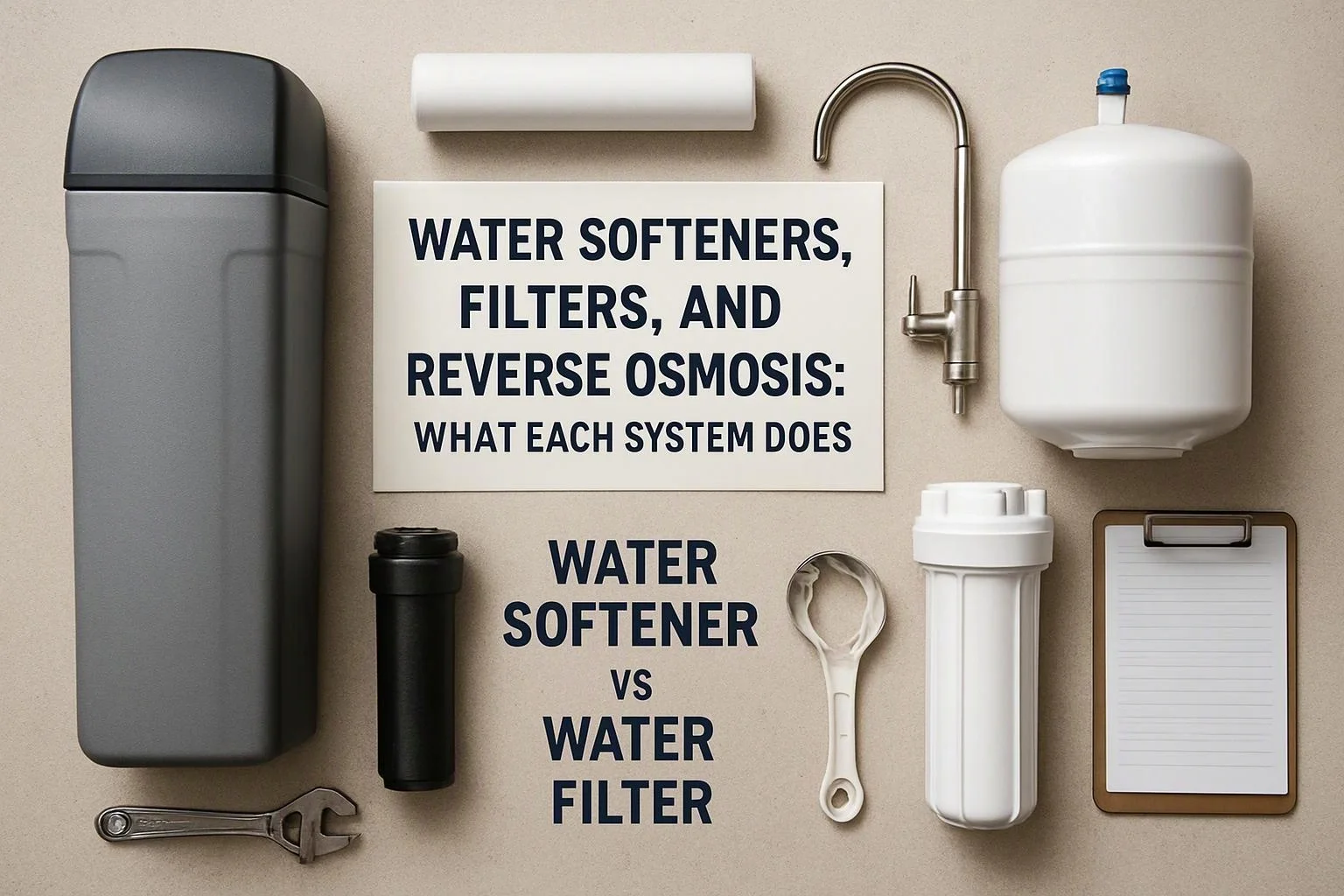
Water Softeners, Filters, and Reverse Osmosis: What Each System Does
A water softener reduces hardness minerals, while a water filter targets selected particles, chemicals, or other contaminants. Reverse osmosis provides highly treated drinking water, and PlumbingAuburnwa.com can help match the system to your water concerns.
Request an EstimateWhat Is the Difference Between a Water Softener and a Water Filter?
A water softener targets hardness minerals, while a water filter targets specific impurities that the filter media can capture or reduce.
Hard water contains dissolved calcium and magnesium. These minerals can leave scale buildup on fixtures, appliances, and plumbing surfaces.
A water filter addresses selected contaminants based on its design. Sediment filtration can capture particles, while carbon filtration can reduce some taste, odor, and chemical concerns.
Water Softener vs Whole-House Filter
A water softener and a whole-house water filter perform different jobs across the home. The right choice depends on whether the main concern is hardness, particles, taste, odor, or another contaminant.
Our team uses the water quality concerns and the plumbing layout to guide system selection. The comparison below shows the basic role of each option.
| System | Main job | Common technology | What it may improve |
|---|---|---|---|
| Water softener | Reduces calcium and magnesium that cause hard water | Ion exchange with a resin tank and brine tank | Scale buildup, water feel, and soap performance |
| Whole-house water filter | Treats selected particles or chemicals throughout the home | Sediment filter or activated carbon | Sediment, chlorine taste, and odor concerns |
Ion exchange does not work like sediment filtration or activated carbon. A whole-house filter also does not automatically provide the same scale prevention as a softener.
What Does Reverse Osmosis Do?
Reverse osmosis pushes water through a fine membrane to reduce many dissolved substances for a treated drinking water supply.
An RO membrane separates water from many dissolved contaminants. The treated water usually serves a drinking water tap, not every fixture in the home.
An under-sink system can support drinking and cooking needs. Reverse osmosis is not a replacement for a water softener when the goal is whole-home scale control.
Does a Water Filter Remove Hard Water Minerals?
A standard water filter doesn't remove dissolved hardness minerals, so a water softener is the system designed for hard water.
Calcium and magnesium remain dissolved in water unless the treatment method is designed to reduce them. Filter cartridges may capture particles, but that does not mean they remove hard water minerals.
Our team checks the water test and the treatment goal before recommending softening equipment. This helps prevent a filter from being used for a problem it cannot address.
When Do You Need Both a Water Softener and a Filter?
A water softener and a whole-house filter work well together when the home has separate hardness and contaminant concerns. Each system can then handle the water problem it was designed to address.
These combinations may make sense when:
Our team matches the equipment to the tested water concerns. Adding equipment without a clear treatment goal can increase maintenance without improving the result.
How Do Water Treatment Systems Work Together?
Water treatment systems work together when their order, capacity, and maintenance needs are planned as one setup. The sequence depends on the water test, equipment instructions, and plumbing layout.
Common system relationships include:
Our team also checks system compatibility, water pressure, drain routing, and available space. Bundling compatible equipment can simplify installation planning, while complex plumbing changes can add work to the project.
Choosing the Right Water Treatment Setup
The right water treatment setup depends on water quality concerns, household water use, and where treatment is needed.
Water testing helps identify hardness minerals, sediment, chlorine, and other dissolved contaminants. Household size and water demand also help determine system capacity.
Point-of-entry treatment serves water as it enters the home. Point-of-use treatment serves one location, such as an under-sink drinking water tap.
We can help connect the test results to practical equipment. A water filter supplier can help with filter selection, while a water softening equipment supplier can help match ion-exchange equipment to the water condition.
What We Check Before Recommending a System
Our team checks the water test and installation conditions before recommending residential water treatment equipment. These checks help us choose a system that fits the home and its plumbing.
We also review filter media, replacement access, and system maintenance needs. Installation must follow applicable plumbing and electrical requirements, so regulated connections should be handled by our licensed team.
What Changes the Cost of a Water Treatment Installation?
Water treatment cost depends on the selected system, treatment goals, installation conditions, plumbing changes, and future maintenance needs; we explain those items in our quote.
Water softener installation, water filter installation, and reverse osmosis installation each have different equipment and connection needs. System capacity, replacement media, filter access, and drain requirements can also change the project scope.
A water test helps prevent unsuitable equipment choices. Our quote explains the recommended system, plumbing work, installation conditions, and ongoing replacement needs.
Plan the Right Water Treatment System
System selection starts with the water problem, the treatment location, and the home’s daily water use. Our team plans the equipment and plumbing connection together.
We can help compare a water filter supplier with a water softening equipment supplier based on the treatment goal. We also plan installation so filter replacement, softener regeneration, and system maintenance remain practical.
Contact our team through our contact page to discuss water testing and water treatment installation. We’ll explain the available setup and what the quote includes.
Questions About Water Treatment Systems
Can a reverse osmosis system soften all the water in a house?
No, a reverse osmosis system usually treats water at a specific drinking water tap. A whole-home water softener is designed to address hardness throughout the house.
Should a whole-house filter go before or after a water softener?
A whole-house filter often goes before a water softener when sediment protection is needed, but the correct order depends on the water test and equipment design. Our team checks compatibility, pressure, maintenance, and manufacturer requirements before choosing the sequence.
What water problems does a water softener not solve?
A water softener does not solve every taste, odor, sediment, or dissolved contaminant concern. Those issues may require a whole-house filter, activated carbon, sediment filtration, or reverse osmosis.
How do I know which water treatment system my home needs?
Water testing, household water use, and the location of the treatment point determine which system fits your home. Our team reviews those factors with the plumbing layout and available installation space.