Backflow Testing in Washington: What Property Owners Should Know
Backflow testing requirements protect drinking water by checking whether an assembly prevents contaminated water from reversing into a supply. At PlumbingAuburnwa.com, we explain the testing process, timing factors, qualified testers, repair needs, and records property owners should manage.
Request an EstimateWhat Backflow Testing Requirements Cover
Backflow testing requirements cover the condition, operation, and records of devices that protect drinking water from reverse flow.
A backflow prevention assembly is a plumbing safety device that helps stop unsafe water from entering the drinking water supply. Requirements can apply to homes, businesses, irrigation systems, and other properties with a cross-connection.
The property owner usually needs to keep the assembly accessible and manage notices from the water purveyor. The responsible authority may set testing, reporting, repair, and recordkeeping rules.
Our Backflow Testing service focuses on the assembly, its operating parts, and the documentation needed for compliance.
Why Are Backflow Assemblies Tested?
Backflow assemblies are tested to confirm that contaminated water can't move backward into the drinking water supply.
Backflow can happen through back-siphonage when pressure drops in the water supply. It can also happen through backpressure when another system pushes water toward the supply.
A cross-connection can link drinking water with chemicals, irrigation water, boiler water, or other unsafe sources. Testing checks whether the device responds correctly before contamination can spread.
When Does a Backflow Assembly Need Testing?
A backflow assembly needs testing when the responsible water authority requires it and after installation, repair, relocation, or replacement when applicable.
The water purveyor controls the testing schedule for the property. Requirements can vary by assembly type, hazard level, system use, and local cross-connection control rules.
Property owners should review each notice carefully. A new installation or a change to the plumbing system may require a test before water service is accepted or continued.
After repair, relocation, or replacement, the assembly may need a new test because its condition or operating setup has changed. We use the water purveyor's instructions to guide the required paperwork.
Who Can Test a Backflow Assembly?
A certified backflow assembly tester must perform the test and submit results in the form accepted by the responsible water authority.
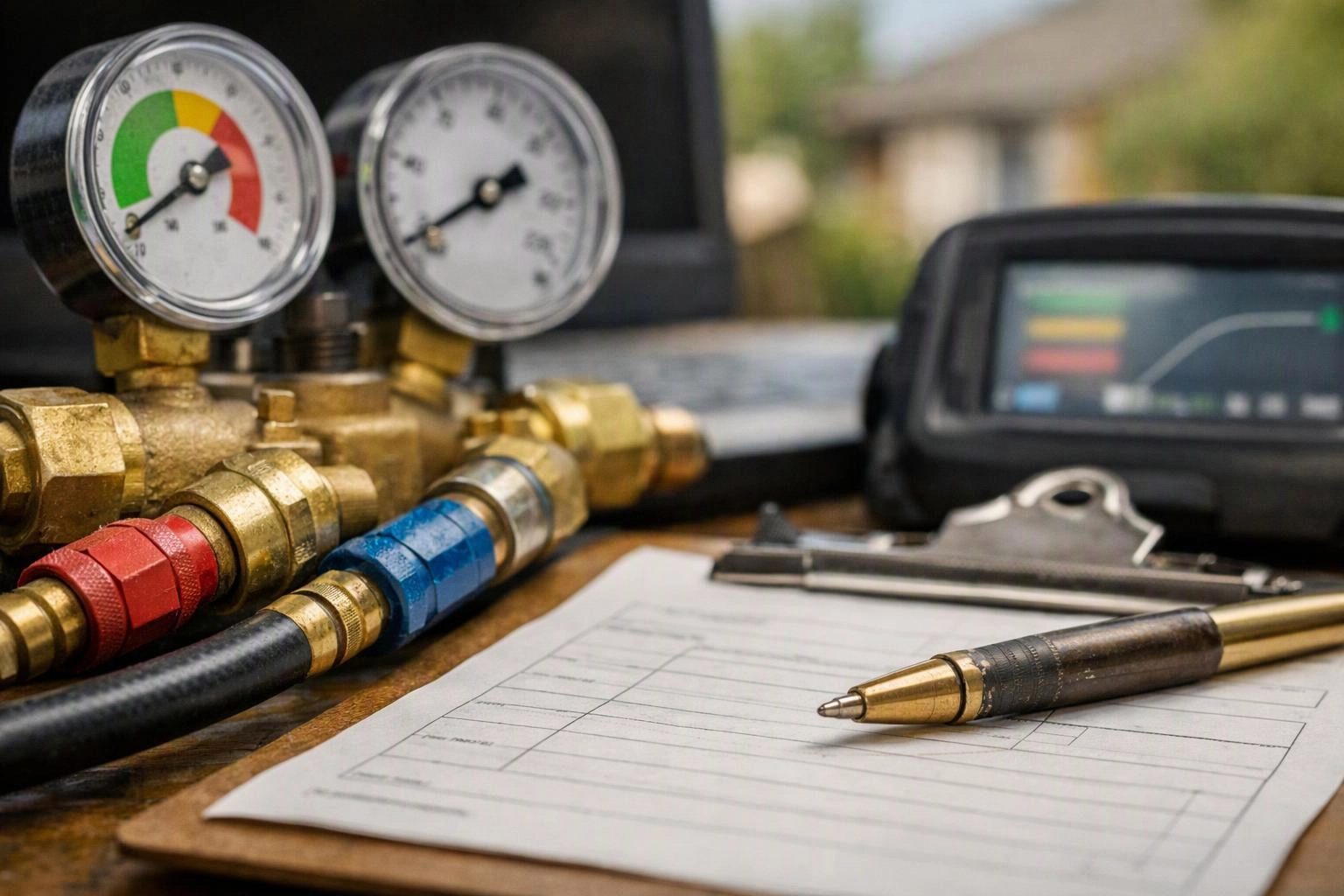
The tester uses an approved test kit and follows the accepted testing method for the assembly. The test report identifies the device, records the readings, and shows whether the assembly passed.
Our team can review the assembly, perform the required testing, and prepare documentation for the water purveyor when the job fits the authority's requirements.
What Happens During a Backflow Test?
A backflow test checks the prevention assembly in a controlled sequence and records how its internal parts respond.
Our crew follows the accepted test procedure and keeps safety in mind around the water supply. The main steps generally include the following:
Different assemblies use different internal parts and testing points. A reduced pressure backflow assembly includes a relief valve, while a double check valve assembly relies on check valves.
When Do Testing and Repair Work Together?
Testing and repair work together when the test shows that the assembly doesn't meet the required operating standard.
We review the failure and explain whether repair parts or full replacement make more sense. Water service may depend on completing the required correction and retest.
We don't treat a failed test as a paperwork issue alone. The result points to a water protection problem that needs a clear correction plan.
How Do Testing and Repair Work Together?
Testing and repair work together as a sequence that moves from inspection to diagnosis, correction, and retesting.
Combining related work can reduce repeat visits when the assembly and access conditions are clear. Cost depends on the repair parts, access, assembly condition, and whether replacement is needed.
Our team can explain the work before repair begins. We can also provide an exact quote after reviewing the assembly and the required scope.
What Does a Backflow Test Report Show?
A backflow test report shows which assembly was tested, where it is located, and how it performed.
The report gives the water purveyor a clear record of the test and any corrective work. Required fields can vary, so the accepted form matters.
| Report field | What it identifies |
|---|---|
| Assembly identification | The device type and identifying information |
| Device location | Where the assembly is installed on the property |
| Test results | The readings and pass or fail outcome |
| Repairs | Corrective work completed or still required |
| Tester information | The qualified tester's required details and certification information |
| Water purveyor records | The information needed for the authority's compliance file |
What Should Property Owners Do After a Failed Test?
A failed test means the backflow assembly needs repair or replacement before the compliance process is complete.
Property owners should arrange backflow assembly repair or replacement, then have the assembly retested and the result documented. The water purveyor may require proof before closing the compliance record.
Our team can explain the failure, identify the needed correction, and confirm what must be retested. Don't remove or bypass the device to restore normal flow without qualified guidance.
What Changes the Cost of Backflow Testing or Repair?
The cost depends on the assembly type, access, testing requirements, and whether repair or replacement is needed.
Assembly location can affect the work when the device is difficult to reach or inspect. The condition of the shutoff valves, test ports, body, and internal parts can also change the repair scope.
Testing alone differs from testing with repair, replacement parts, or a required retest. We review the job details and provide an exact PlumbingAuburnwa.com quote based on the work involved.
To request a quote, contact our team with the assembly location, notice from the water purveyor, and any previous test report.
How Can Property Owners Prepare for Testing?
Property owners can prepare by making the assembly and its records easy to review.
Good preparation helps our crew confirm the device and follow the water purveyor's requirements.
Don't alter the assembly before testing. Changes can affect the test result and may create a safety or compliance problem.
How We Help With Backflow Testing
We help property owners manage backflow testing, assembly repair, retesting, and test documentation.
Our team starts by reviewing the assembly and the water purveyor's requirements. We then test the device, explain the result, and identify repair or replacement needs when required.
We keep the process focused on drinking water protection and clear records. When you need an exact quote, we base it on the assembly, access, test requirements, and repair scope.