How to Choose the Right Pipe Material for Your Plumbing Project
Plumbing pipe materials each balance durability, heat tolerance, installation needs, and cost drivers differently. PlumbingAuburnwa.com compares copper, PEX, PVC, CPVC, and other common options so you can match the pipe to the project. We use the same practical factors when we assess a repair or replacement.
Request an EstimateWhat Should You Check Before Choosing a Plumbing Pipe?
Plumbing pipe selection depends on the water type, temperature, location, connection method, and local code requirements.
A water supply line needs different properties than a drain pipe. Hot water also places different demands on pipe than cold water.
We check whether the pipe will carry potable water, serve a drainage system, or connect to a hot water line. We also consider pipe access, exposure, water pressure, and building code requirements before recommending a material.
How Do Common Plumbing Pipes Compare?
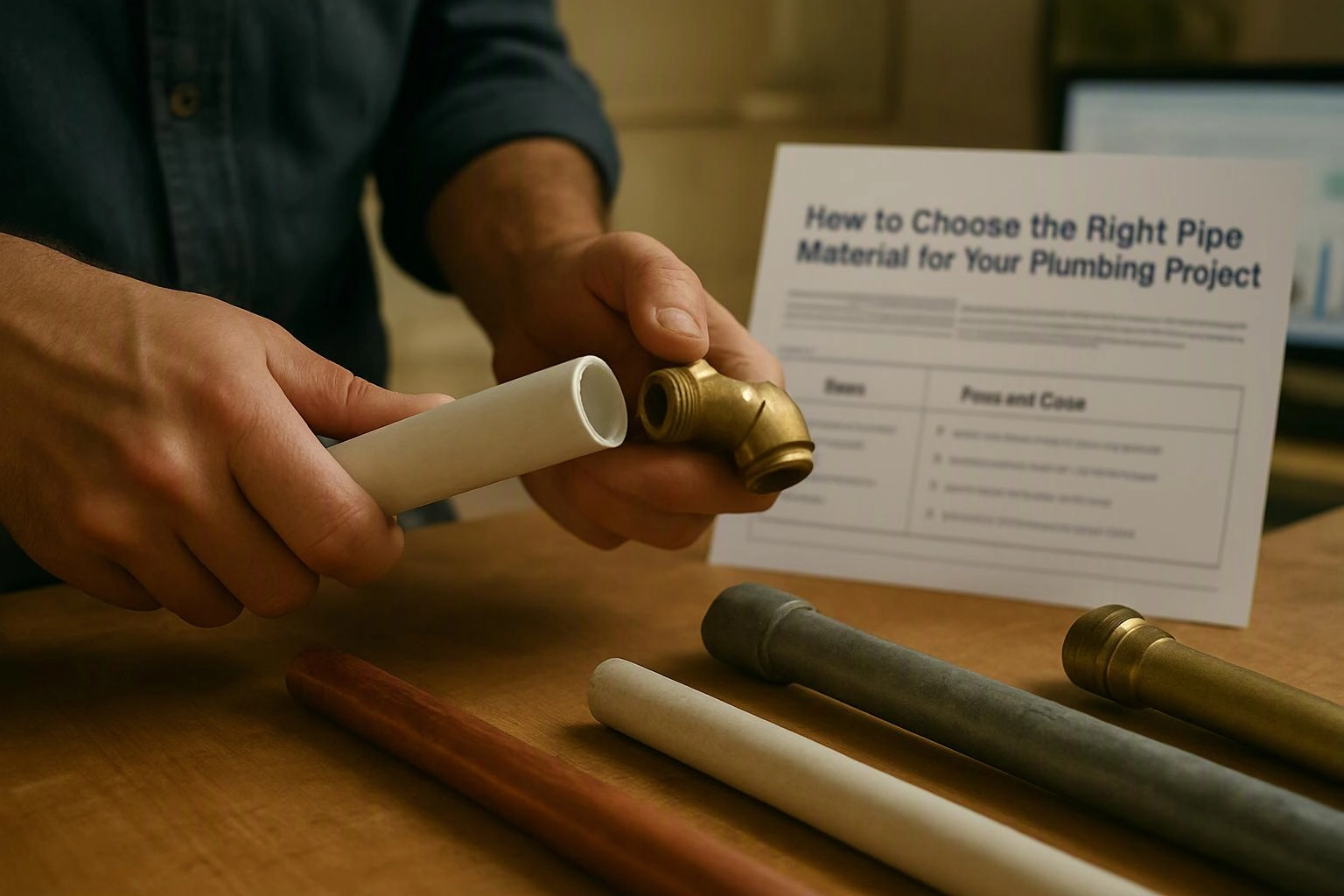
Copper, PEX, PVC, CPVC, and galvanized steel each suit different plumbing conditions, so the best choice depends on the system and location.
Our team compares the pipe's purpose, temperature rating, connection method, and repair access. The table shows common strengths and limits at a glance.
| Pipe material | Common uses | Pros | Cons |
|---|---|---|---|
| Copper pipe | Water supply lines and hot water systems | Rigid, durable, and heat resistant | Can corrode and needs skilled joint work |
| PEX pipe | Interior water supply lines | Flexible and useful in tight spaces | Needs protection from unsuitable exposure and heat conditions |
| PVC pipe | Drainage and approved cold-water uses | Lightweight and resistant to many forms of corrosion | Not intended for every hot-water application |
| CPVC pipe | Approved hot and cold potable water systems | Handles more heat than standard PVC | Requires approved fittings and proper solvent welding |
| Galvanized steel pipe | Older water supply systems | Rigid and mechanically strong | Can corrode and collect internal buildup |
Copper Pipe Pros and Cons
Copper pipe is a rigid water pipe that offers strong durability and heat resistance. It works well for many hot water systems, but corrosion can affect older or poorly matched systems.
Copper uses soldered joints, so connection quality matters during installation and repair. We also check nearby pipe corrosion and water conditions before reusing existing copper.
PEX Pipe Pros and Cons
PEX pipe is flexible tubing that helps route water supply lines through tight or difficult spaces. Its flexibility can reduce the number of joints needed in some layouts.
PEX can provide useful freeze resistance because it can flex under some changing conditions. Crimp fittings, expansion fittings, and compression fittings must match the tubing and the repair plan.
PVC and CPVC Pipe Pros and Cons
PVC is commonly used for cold-water and drain applications, while CPVC is designed for hot and cold potable water systems where approved.
PVC pipe is a rigid pipe often joined through solvent welding. CPVC pipe uses a similar connection method, but its temperature limits and approved fittings differ.
We confirm the pipe's temperature rating and intended use before connecting it to a water supply system.
Galvanized Steel Pipe Pros and Cons
Galvanized steel pipe is a rigid pipe found often in older plumbing systems. Its protective coating can wear down, allowing corrosion and internal buildup to restrict flow.
We inspect the pipe wall, joints, and water quality before choosing a repair section or full pipe replacement. Widespread corrosion usually calls for a broader replacement plan.
PEX vs Copper: Which Pipe Fits the Project?
PEX usually fits projects that benefit from flexible installation, while copper suits systems that need rigid pipe and strong heat tolerance.
PEX pipe can simplify routing around obstacles and may provide easier repair access in some layouts. Copper pipe offers a firm installation and performs well where heat tolerance is a key concern.
We compare water quality, water pressure, connection method, and available access. Existing pipe fittings also matter because material compatibility affects the repair.
For a leaking supply line, our Water Line Repair process starts with locating the problem and checking the surrounding pipe condition.
PVC vs PEX: How Are They Different?
PVC is rigid and commonly used for drainage or approved cold-water applications, while PEX is flexible and commonly used for interior water supply lines.
PVC pipe works well where straight runs and stable support suit the drainage system. PEX pipe bends more easily and often helps when pipe access is limited.
We check the fittings, exposure to sunlight, temperature, and intended water use. Material compatibility matters when a new section connects to an existing pipe type.
When Should You Choose CPVC Instead of PVC?
CPVC is the better fit when an approved plastic pipe must carry hot potable water, while PVC is generally selected for approved cold-water or drainage uses.
CPVC pipe has a higher temperature rating for certain hot water applications. PVC pipe remains useful for cold water and drainage where the product and building code allow it.
We verify approved fittings, solvent welding materials, and the pipe's intended service before making a connection.
When Do Water Line Repair and Replacement Work Together?
Water line repair and water line replacement work together when the damaged area must be fixed while nearby pipe condition is reviewed.
Our team may recommend both services when the pipe problem involves more than one isolated connection.
How Do Repair and Replacement Fit Into the Plumbing Process?
Pipe inspection helps our team decide whether the work needs a repair section, a replacement section, or both.
We connect the findings to the quote scope, material choice, access needs, and other cost drivers.
How We Choose a Pipe Material for a Repair or Replacement
Our team chooses approved materials after reviewing the pipe condition, water pressure, connection points, and access conditions.
What Changes the Cost of a Pipe Material Project?
Pipe material, access, damaged length, connection work, and surface restoration change the project cost, so we include those conditions when preparing a quote.
Material choice affects fittings, connection methods, and compatibility with the existing piping system. Access difficulty can also change the work needed to reach and protect the pipe.
We review the damage extent and replacement scope before giving an exact quote. Our quote explains the planned work, selected material, connection points, and restoration needs.
Which Pipe Material Is Right for Your Plumbing Project?
The right pipe material matches the system's purpose, temperature, location, condition, and approved installation method.
Water supply lines may call for copper, PEX, CPVC, or another approved option. Drainage usually calls for a material suited to waste flow and the surrounding structure.
Our team uses pipe inspection, leak detection, access review, and material compatibility checks to guide pipe repair or pipe replacement. You can request an exact quote through our contact page.
Questions About Choosing Plumbing Pipe
Can different plumbing pipe materials be connected in the same system?
Yes, different plumbing pipe materials can connect when approved transition fittings and compatible methods are used. Our team checks the joint, pressure, water temperature, and building code before making that connection.
What pipe material is least suitable for outdoor exposure?
Unprotected plastic pipe can be a poor choice for outdoor exposure when sunlight or temperature conditions exceed its approval. Our team checks the product rating, protection needs, and local code before selecting an exterior pipe.
How can you tell whether an old pipe needs repair or replacement?
An old pipe may need replacement when corrosion, internal buildup, or repeated leaks affect more than one area. We inspect the pipe condition and access before choosing a repair section or broader replacement.
Does water pressure affect plumbing pipe selection?
Yes, water pressure affects plumbing pipe selection, fitting choice, and connection planning. Our team checks pressure conditions when reviewing material compatibility and the repair or replacement scope.