Slab Leak Repair vs. Other Pipe Leak Repairs: Comparing the Work
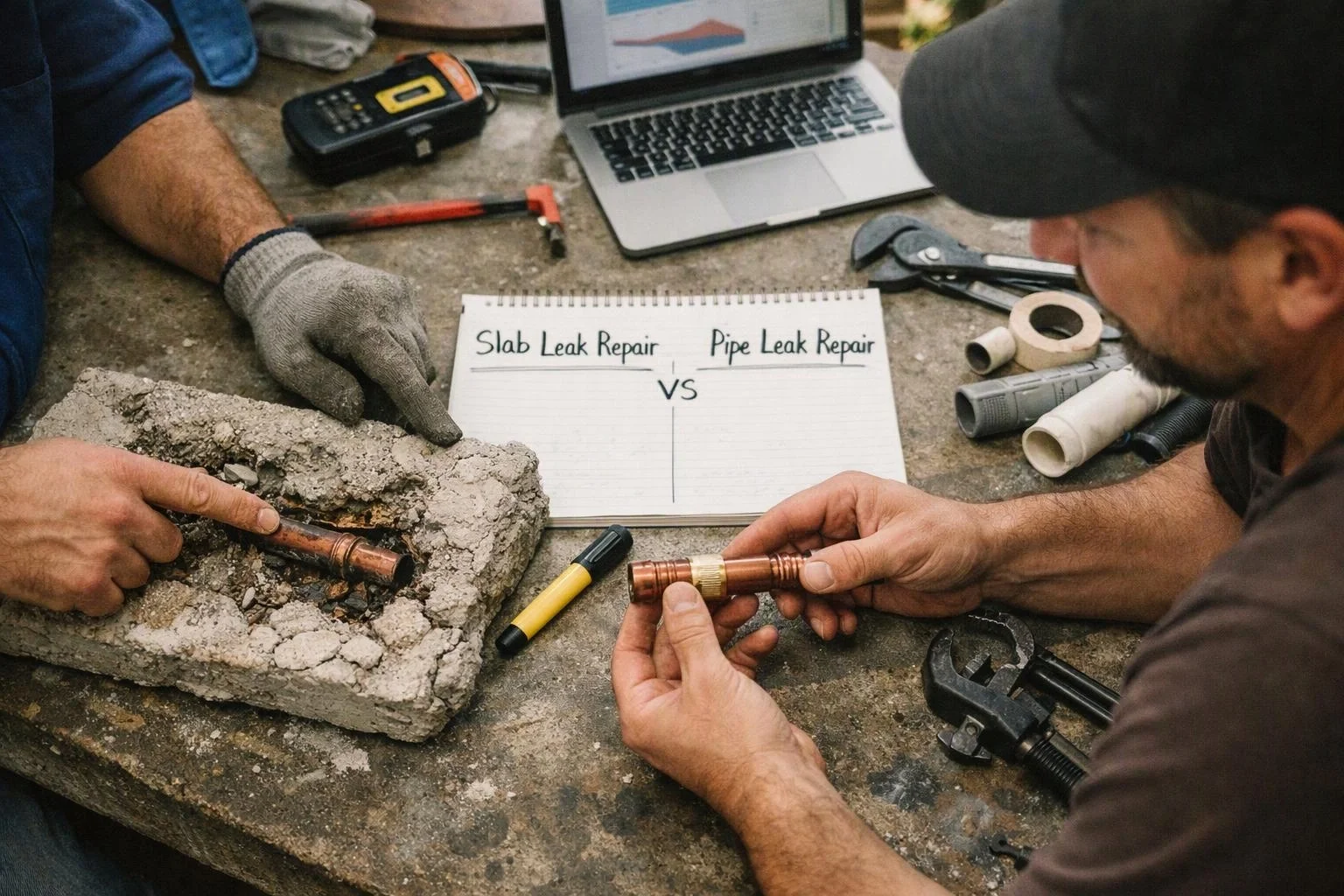
Slab leak repair addresses a leak beneath a concrete foundation and may require floor access or pipe rerouting. Other pipe leak repairs usually reach the damaged pipe through walls, ceilings, soil, or exposed plumbing. PlumbingAuburnwa.com compares the work, decision points, and quote factors. The right choice depends on leak location, pipe condition, access, and restoration needs.
Request an EstimateQuick Picks
Slab leak repair and other pipe leak repairs fit different access conditions. The leak location usually determines which repair path makes sense.
- Slab leak repair fits hidden foundation plumbing beneath a concrete slab.
- Accessible pipe leak repair fits damaged plumbing reached through a wall, ceiling, crawl space, soil, or exposed area.
How Slab Leak Repair Differs From Other Pipe Leak Repairs
Slab leak repair reaches plumbing beneath a concrete slab, while other pipe leak repairs reach pipes through more accessible areas.
A slab leak is a hidden water leak below a concrete foundation. A pipe leak can occur in a wall cavity, ceiling, crawl space, attic, soil, or exposed plumbing. Leak detection helps identify the source before we choose plumbing access or a repair method.
Our team may need to protect flooring, open a targeted area, or plan a pipe reroute. Accessible plumbing may need less structural opening, but water damage can still require careful restoration.
Slab Leak Repair and Pipe Leak Repair Compared
Slab leak repair usually involves harder access and more restoration planning, while accessible pipe leak repair usually limits work to the exposed or reachable pipe area.
| Factor | Slab Leak Repair | Other Pipe Leak Repair | Decision Note |
|---|---|---|---|
| Repair access | May require concrete removal, floor access, or a reroute. | May use a wall opening, ceiling opening, crawl space, soil, or exposed pipe. | The hidden location controls the access plan. |
| Leak detection | Often needs focused testing and non-destructive locating. | May be found through visible moisture or accessible pipe inspection. | The leak source must be confirmed before opening surfaces. |
| Repair method | May use a targeted repair or pipe reroute. | May use joint repair, section repair, or pipe replacement. | Pipe material and damage extent guide the method. |
| Cost drivers | Detection, access, concrete work, rerouting, and restoration can add work. | Access, pipe section, fittings, and surface restoration guide the quote. | We need to inspect the repair area before giving an exact quote. |
| Repair timeline | May involve more planning and restoration steps. | May involve fewer access and restoration steps when the pipe is reachable. | Access conditions and damage extent affect the work sequence. |
| Maintenance | Monitoring water pressure and repeat symptoms can help protect foundation plumbing. | Visible checks can help reveal joint wear, corrosion, or moisture. | Early attention can limit water damage. |
| Best use case | A confirmed under-slab plumbing leak. | A confirmed leak outside the slab or in reachable plumbing. | The leak location should lead the decision. |
What Slab Leak Repair Involves
Slab leak repair starts with locating the hidden leak, then uses a planned access or reroute method to restore water service.
We may begin with a visual inspection and pressure testing. Acoustic detection can help narrow the leak location without opening the entire floor.
After confirming the source, we assess the concrete slab, pipe material, and surrounding moisture. Our team may expose the pipe for a targeted repair or recommend a pipe reroute when access, damage, or repeat leaks make that approach more suitable.
Concrete removal and floor restoration are separate planning points. We explain the repair area, water damage concerns, and surface restoration needs before work begins. For more detail, see our Slab Leak Repair service page.
Advantages of Slab Leak Repair
Slab leak repair can protect the property by addressing foundation plumbing through a planned repair strategy.
Best for: a confirmed leak beneath a concrete slab where direct access or rerouting can restore reliable water service.
What Other Pipe Leak Repairs Involve
Other pipe leak repairs address damaged plumbing outside the slab, so our team can choose access through a wall, ceiling, crawl space, soil, or an exposed area.
A wall leak or ceiling leak may need a controlled opening to reach the concealed pipe. An attic plumbing or crawl space leak may offer a clearer path to the pipe section.
We inspect the pipe material, pipe joint, shutoff valve, and damage extent. The repair may involve a joint repair, pipe replacement, or a focused repair to the damaged section.
Advantages of Other Pipe Leak Repairs
Accessible pipe leak repair can reduce structural disruption when the damaged plumbing is easy to reach.
Best for: a confirmed leak in reachable plumbing where the pipe condition supports a localized repair or replacement.
Which Repair Approach Fits the Leak?
The best repair approach depends on the leak location, pipe condition, access route, damage extent, and restoration needs.
Our team considers whether the pipe is beneath the slab, inside a wall, above a ceiling, or in a crawl space. We also check water pressure, pipe material, moisture damage, and signs of repeat failure.
A direct repair may fit a sound pipe with one damaged area. Pipe replacement may make more sense when the section has broad deterioration. A pipe reroute may fit a concealed leak when opening the slab would create more disruption.
We explain the repair method and its access needs before work starts. Code and inspection requirements can affect the work, so regulated plumbing repairs should be completed by a licensed plumbing company.
What Changes a Concealed Pipe Leak Repair Quote?
A concealed pipe leak repair quote changes with detection work, access difficulty, pipe damage, reroute needs, and surface restoration.
Leak detection may require pressure testing or acoustic detection before the repair area can be opened. The quote also depends on whether we need concrete removal, a wall opening, a ceiling opening, or access through a crawl space.
Pipe material and damage extent affect whether we recommend a pipe section repair, pipe replacement, or pipe reroute. Water damage may add drying, protection, or surface restoration work to the overall plan.
We provide an exact quote after assessing the leak source and repair area. The quote should identify detection, access work, repair materials, water shutoff needs, and restoration responsibilities.
How We Plan Slab and Other Pipe Leak Repairs
Our team plans slab and other pipe leak repairs by confirming the source, comparing access options, and explaining the quote before work begins.
Questions About Slab and Pipe Leak Repairs
Can a slab leak be repaired without breaking the concrete?
Yes, a slab leak can sometimes be repaired without breaking the concrete when a pipe reroute provides a suitable access path. Our team checks the leak location, pipe condition, layout, and water service needs before recommending that method.
When does a slab leak need a pipe reroute?
A slab leak may need a pipe reroute when direct access would cause major disruption, the damaged line is difficult to reach, or the existing pipe condition supports a new route. Our team confirms those conditions through detection and inspection.
What signs point to a leak beneath the slab?
Signs of a leak beneath the slab can include unexplained moisture, warm floor areas, sound from running water, falling water pressure, or water use that continues when fixtures are off. Our team uses leak detection to confirm whether the source is under the slab.
Does a concealed pipe leak always require opening a wall or floor?
No, a concealed pipe leak doesn't always require opening a wall or floor. Our team may use detection first, then choose an accessible route, a targeted opening, or a pipe reroute based on the leak location and repair method.