Tank vs. Tankless Water Heaters: Comparing Replacement and Installation
Tank water heaters usually offer simpler replacement and lower upfront complexity, while tankless models save space and provide on-demand hot water. PlumbingAuburnwa.com can assess fuel, electrical capacity, water use, venting, and installation needs before preparing a quote. The right choice depends on your household’s hot water demand and existing utility connections.
Request an Estimate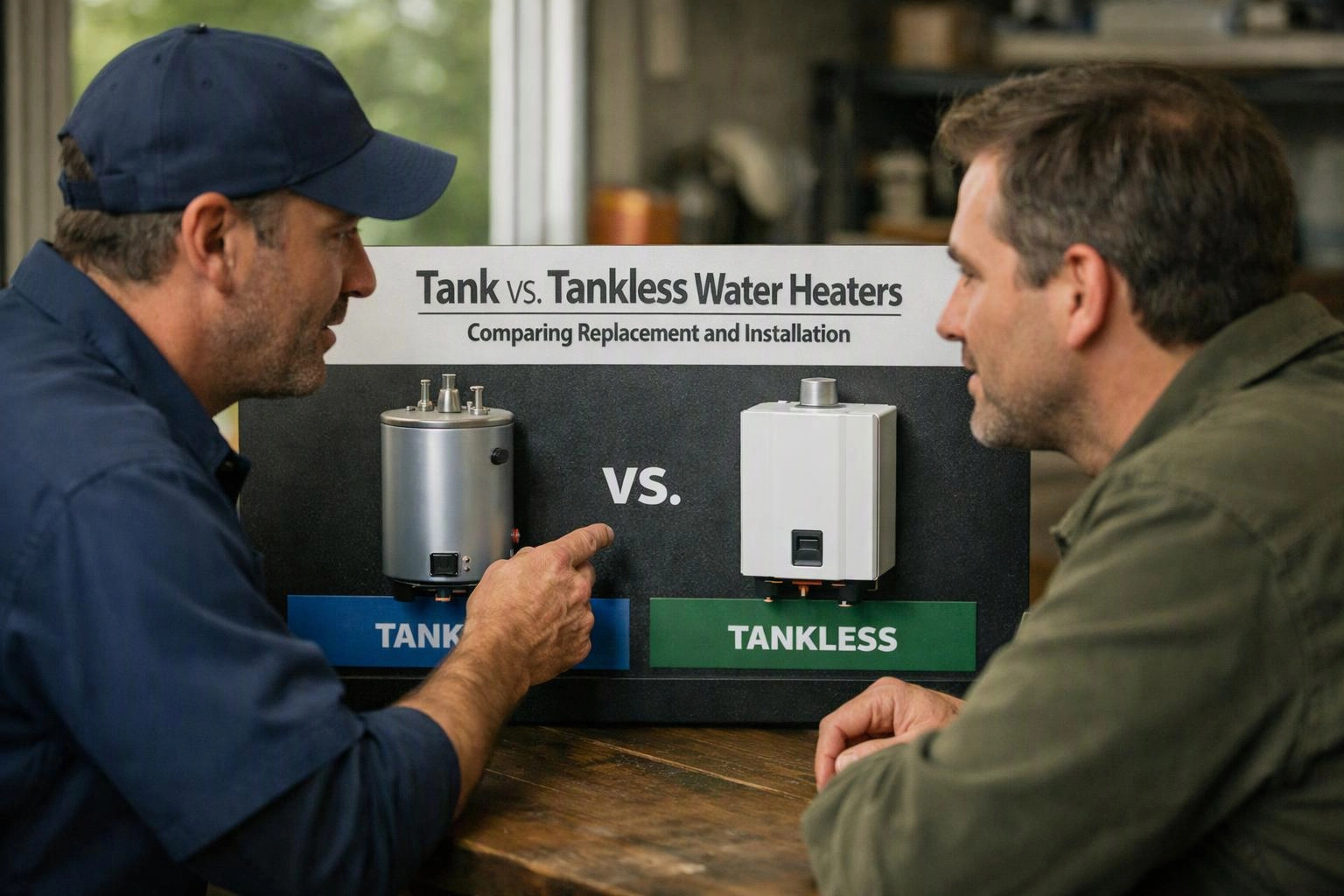
Tank vs. Tankless Water Heaters at a Glance
Tank and tankless water heaters are compared for replacement, installation requirements, operating needs, and household fit. Tank models store heated water, while tankless models heat water as demand occurs.
The better choice depends on space, fuel type, water use, utility capacity, venting, and the condition of existing water lines.
| Option / System | Best For | Cost and Installation | Maintenance and Trade-Offs |
|---|---|---|---|
| Storage tank water heater | Homes that need stored hot water and familiar connections | Often has lower installation complexity when replacing a similar unit | Needs checks for sediment, corrosion, and safety controls |
| Tankless water heater | Homes that value space savings and on-demand heating | Can cost more to install when gas, electrical, or venting work is needed | Needs scale control and periodic flush service |
- Tank models suit straightforward replacement and stored hot water.
- Tankless models suit compact spaces and on-demand hot water.
What Is the Difference Between Tank and Tankless Water Heaters?
A tank water heater is a storage appliance that heats and holds hot water. A tankless water heater is an on-demand appliance that heats water as it flows.
A storage tank includes a burner or heating element, thermostat, water inlet, hot water outlet, and temperature and pressure relief valve. A tankless unit uses a heat exchanger to transfer heat during water use.
Tank systems provide storage capacity for short periods of heavy use. Tankless systems keep producing hot water while water flow, fuel capacity, and temperature needs remain within the unit’s limits.
Why Choose a Tank Water Heater?
Tank water heaters are often practical when straightforward replacement, familiar connections, and stored hot water matter most.
Best for: Tank water heaters fit homes that want familiar installation conditions and stored hot water.
Why Choose a Tankless Water Heater?
Tankless water heaters suit households that want compact equipment and on-demand heating.
Best for: Tankless water heaters fit homes with suitable gas supply or electrical service and a clear need for compact, on-demand heating.
Which Water Heater Is Better for Your Household?
Household size and hot water demand decide which water heater fits best. A tankless water heater can handle multiple showers when its flow rate, incoming water temperature, and fuel or electrical capacity match the demand.
We review simultaneous use, shower flow, water temperature needs, and available space. We also check whether the fuel type supports the selected equipment.
A tank may better fit homes with predictable stored-water needs. A tankless model may better fit homes that value space and on-demand heating.
Does Tankless Installation Require Gas or Electrical Upgrades?
Yes, tankless installation can require gas, electrical, venting, or service upgrades when the existing system cannot support the new unit.
A gas tankless water heater may need greater gas line capacity and a compatible venting system. An electric tankless water heater may need a dedicated circuit and enough electrical service.
Condensing tankless water heaters and non-condensing tankless water heaters can use different venting arrangements. We check the equipment instructions, gas supply, electrical connections, venting, and code and inspection requirements before installation.
How Replacement and Installation Costs Are Determined
Water heater replacement cost depends on equipment selection, access, fuel type, venting, piping, and required upgrades.
Water heater installation may include removal and disposal, water lines, a drain pan, gas line work, electrical work, and safety connections. Permit and inspection needs can also affect the work included.
We explain the work in the replacement quote. Request an assessment so we can review the existing system and prepare an exact quote for the selected installation.
For more service details, see our Water Heater Installation service page.
How We Assess a Water Heater Replacement
Our water heater replacement assessment connects household demand with the home’s existing utilities and installation location.
Which Water Heater Needs More Maintenance?
Both systems need maintenance, but each system has different service concerns. Tankless units need attention to mineral scale and flow components, while tank units need checks for sediment, corrosion, and safety controls.
Tank maintenance can include checking sediment buildup, the anode rod, and the temperature and pressure relief valve. Water quality can affect corrosion and sediment inside the storage tank.
Tankless maintenance often includes flush service when mineral scale affects the heat exchanger or water flow. We can match maintenance needs to the water quality and equipment design.
How to Choose Between Replacement Options
Replacement planning starts with the home’s hot water demand and available utility capacity.
What Happens During Professional Installation?
PlumbingAuburnwa.com installs the selected water heater by checking connections, completing required plumbing or utility work, testing safety functions, and confirming proper operation.
Our crew begins with water shutoff and fuel or electrical isolation. We connect the water lines, gas connections, or electrical connections as required by the selected system.
We review venting, the temperature and pressure relief valve, drainage, and other safety points. We complete leak testing and startup testing before the system is placed into service.
We also consider inspection criteria and code requirements that apply to the installation. Gas, electrical, and plumbing work should be completed by our licensed team.
Connect Your Comparison to Water Heater Installation
Water heater installation should match the home’s demand, fuel type, utility capacity, venting, and available space.
Our team can compare tank and tankless options during a water heater replacement assessment. We explain the installation work, maintenance needs, and equipment fit before preparing a quote.
Choose the system that supports your daily use and the home’s existing conditions. A careful installation assessment helps prevent utility, venting, and capacity problems after replacement.
Questions About Tank and Tankless Water Heaters
Can a tankless water heater run out of hot water?
A tankless water heater can stop meeting demand when simultaneous use exceeds its flow rate or available fuel and electrical capacity. The unit heats water as it flows, so incoming water temperature also affects its output.
Is a tankless water heater always more efficient than a tank model?
No, a tankless water heater is not always the better choice for every home. Energy use depends on household demand, equipment selection, fuel type, installation conditions, and how much standby heat a tank system loses.
Can an electric tankless water heater replace a gas tank water heater?
Yes, an electric tankless water heater can replace a gas tank model when the home has enough electrical service and the installation meets applicable code requirements. We also review water demand, wiring, dedicated circuits, and the removal of the gas connection.
What should I check before replacing a tank water heater with a tankless model?
Check hot water demand, flow rate, incoming water temperature, fuel type, gas supply, electrical service, venting, water lines, and installation space. We review those conditions with the required code and inspection criteria before preparing a replacement quote.
Request an assessment when you’re ready to compare replacement options and installation requirements.
Related Resources
Sewer Camera Inspection vs. Sewer Cleaning: What to Book First
Compared ToPipe Repair vs. Repiping: Comparing a Local Fix With a Larger Project
Compared ToSlab Leak Repair vs. Other Pipe Leak Repairs: Comparing the Work
Compared ToEmergency vs. Scheduled Plumbing Service: What Can Change the Quote