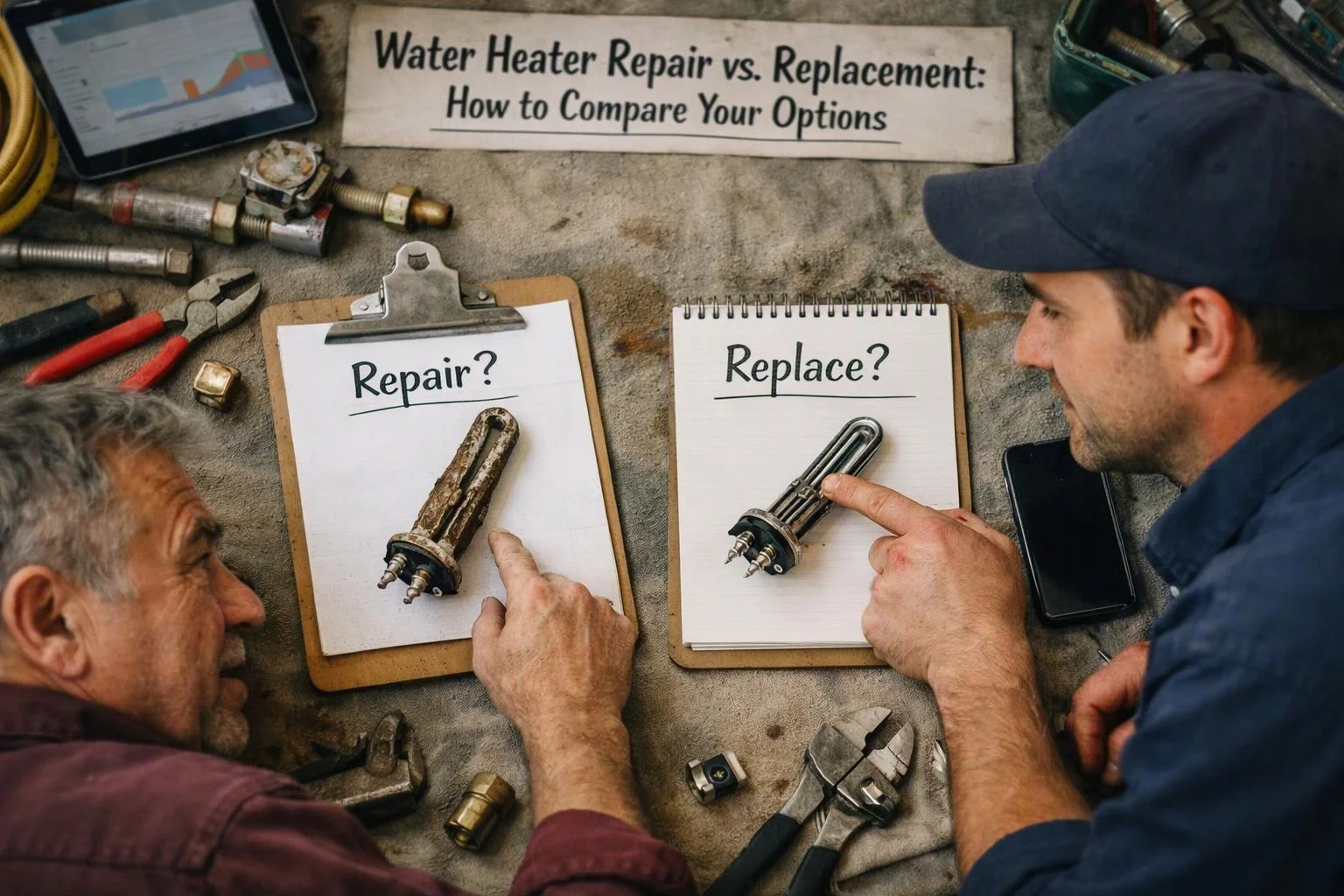
Water Heater Repair vs. Replacement: How to Compare Your Options
Water heater repair usually fits isolated, safe problems, while replacement makes more sense when damage, safety concerns, or repeated failures affect the unit. PlumbingAuburnwa.com checks the heater, explains the trade-offs, and provides a quote for the recommended repair or replacement.
Request an EstimateQuick Picks
Water heater repair suits a sound tank with one correctable fault. Water heater replacement suits a failing tank, unsafe operation, or poor future reliability.
- Repair: Best for an isolated part or connection problem.
- Replacement: Best for tank damage, recurring repairs, or safety concerns.
How Do Water Heater Repair and Replacement Compare?
Water heater repair addresses a specific fault, while replacement provides a new unit when the existing heater is unsafe, damaged, or no longer dependable.
Our team compares the unit condition, likely future repairs, installation needs, and hot water supply. The right choice depends on the heater’s condition, safety, and value over time.
| Factor | Water Heater Repair | Water Heater Replacement |
|---|---|---|
| Cost drivers | Fault, replacement parts, labor, and access | Unit, labor, removal, access, and installation changes |
| Timeline | Usually tied to diagnosis and part availability | Tied to unit selection and installation requirements |
| Maintenance | Keeps the existing system operating | Starts a new maintenance cycle |
| Water heater lifespan | Depends on tank integrity and remaining unit condition | Provides a new operating life for the system |
| Best for | A safe heater with an isolated fault | A damaged, unsafe, or unreliable heater |
When Does Water Heater Repair Make Sense?
Water heater repair makes sense when the tank remains sound and the fault is isolated, safe to correct, and worth addressing.
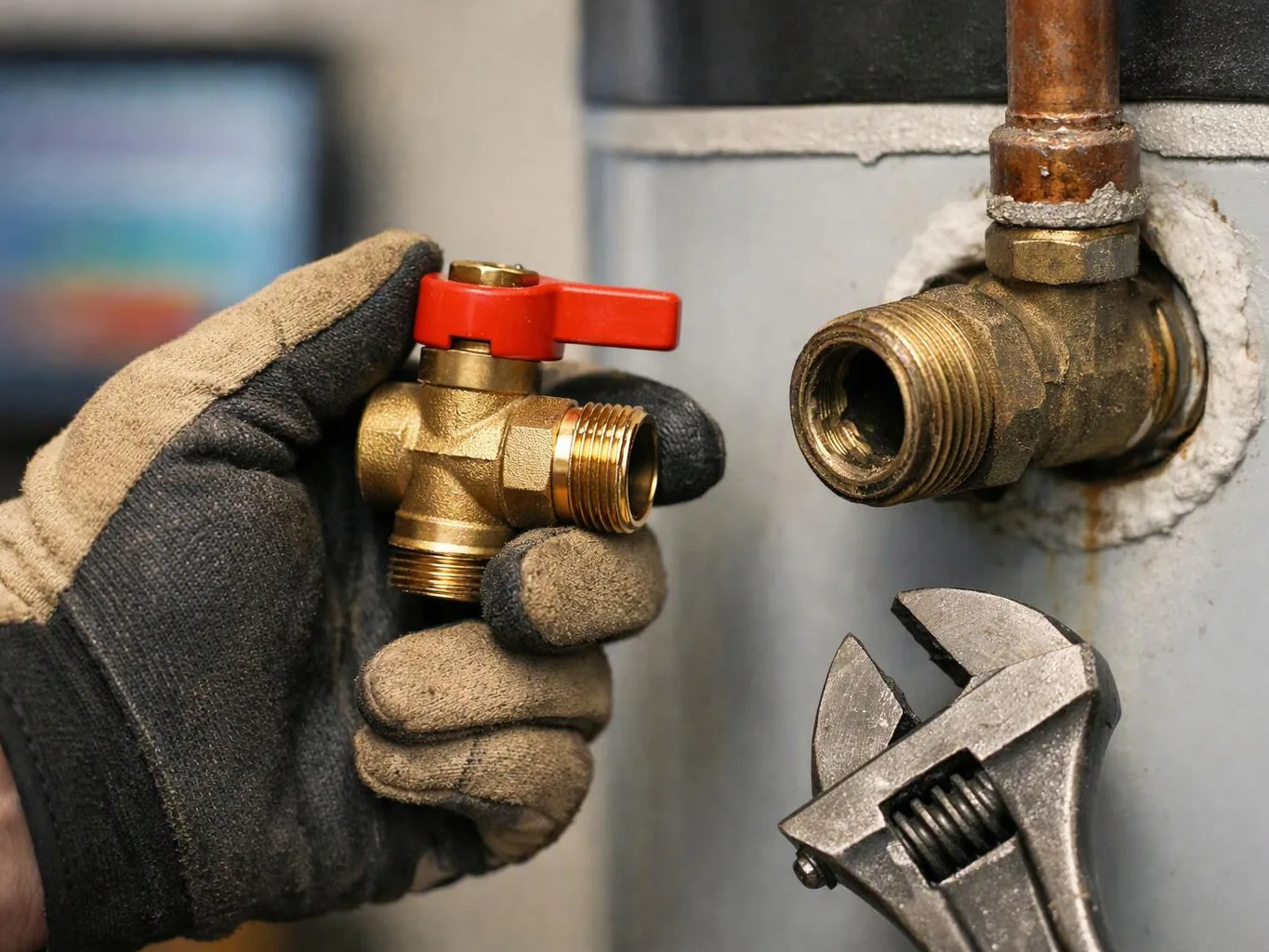
A leaking connection can often point to a fitting or valve issue. Other repairable faults may involve the thermostat, heating element, pilot light, or pressure relief valve.
Our team checks the water heater tank before recommending parts. A sound tank supports repair, while corrosion, active tank damage, or spreading leaks can change the decision.
Our Water Heater Repair service focuses on identifying the failed part and checking safe operation afterward.
What Are the Advantages of Repairing a Water Heater?
Water heater repair can preserve a sound system while addressing the part that caused the problem. Repair also keeps the decision focused on the current fault.
Best for: A safe water heater with good tank integrity and one clear fault.
When Should You Replace a Water Heater?
Water heater replacement is the better choice when the tank is failing, safety is uncertain, or repeated repairs no longer restore dependable hot water.
A tank leak can cause water damage and usually signals a serious tank problem. Corrosion, rust-colored water, recurring repairs, and insufficient hot water also deserve close review.
Unsafe operation may involve a failed pressure relief valve, gas control problem, damaged venting, or an electrical fault. A replacement water heater may also improve energy efficiency when the current unit performs poorly.
What Are the Advantages of Replacing a Water Heater?
Water heater replacement provides a new unit when repair cannot deliver dependable performance. Our team matches the system to the home’s fuel type, capacity, connections, and installation requirements.
Best for: A water heater with tank damage, unsafe operation, or recurring breakdowns.
What Should You Check Before Choosing Repair or Replacement?
Water heater inspection should confirm the leak source, tank condition, fuel type, and installation requirements before work begins.
Tank water heater and tankless water heater systems have different installation needs. Our team checks those needs before recommending repair or water heater installation.
What Changes the Cost of This Water Heater Decision?
Water heater costs change with the fault, parts, unit type, access, installation changes, and required safety work.
Water heater repair cost drivers include the model, replacement parts, labor, access, and the failed component. A heating element replacement may involve different work from a thermostat replacement or gas control repair.
Replacement cost drivers include the new unit, removal, venting, electrical work, gas connections, and plumbing modifications. Our quote explains the recommended work, included materials, installation requirements, and safety checks.
How We Help You Choose the Right Water Heater Option
PlumbingAuburnwa.com starts with a water heater inspection and connects the findings to a repair recommendation or replacement recommendation.
Our team checks tank integrity, components, venting, fuel connections, electrical connections, and code compliance. We explain why the option fits the unit condition and future reliability.
For replacement work, we plan water heater installation around capacity, system compatibility, access, and safety. We provide a quote that identifies the planned work and relevant installation changes.
What Water Heater Problems Need Prompt Attention?
Water heater leaks, gas odors, burning smells, and electrical faults need prompt attention because they can create safety risks.
Water heater shutoff controls can help limit damage during a serious leak or unsafe event. Gas odor requires leaving the area safely and contacting the appropriate emergency service before licensed plumbing work continues.
Scalding water, unusual electrical behavior, and burning smells also need prompt review. Our team can assess the system and identify the safe next step.
Questions About Water Heater Repair or Replacement
Can a leaking water heater be repaired?
Yes, a leaking water heater can be repaired when the leak comes from a connection, valve, or replaceable component. A leaking tank with corrosion or damaged seams usually needs replacement.
Is a noisy water heater worth repairing?
Yes, a noisy water heater may be worth repairing when the tank remains sound and the cause is limited to sediment or a component issue. Our inspection checks the noise, tank integrity, heating parts, and overall unit condition.
What signs show that a water heater replacement is urgent?
Water heater replacement may be urgent when the tank leaks, corrosion spreads, water becomes dangerously hot, or gas and electrical safety are uncertain. Shut off the system when safe and contact our team for licensed plumbing work.
Can I replace a gas water heater with an electric model?
Yes, a gas water heater can be replaced with an electric model when the home supports the required electrical connection and installation changes. Our team reviews capacity, electrical work, code compliance, and system compatibility before recommending the change.
What should I do if my water heater has a gas odor?
Leave the area safely and contact the appropriate emergency service when a water heater has a gas odor. Avoid flames and electrical switches, and arrange licensed plumbing work after the area is declared safe.
Choose repair when the tank is sound and the fault is isolated. Choose replacement when damage, safety concerns, or recurring repairs make future reliability uncertain.
Request a water heater quoteRelated Resources
Sewer Camera Inspection vs. Sewer Cleaning: What to Book First
Compared ToPipe Repair vs. Repiping: Comparing a Local Fix With a Larger Project
Compared ToSlab Leak Repair vs. Other Pipe Leak Repairs: Comparing the Work
Compared ToEmergency vs. Scheduled Plumbing Service: What Can Change the Quote